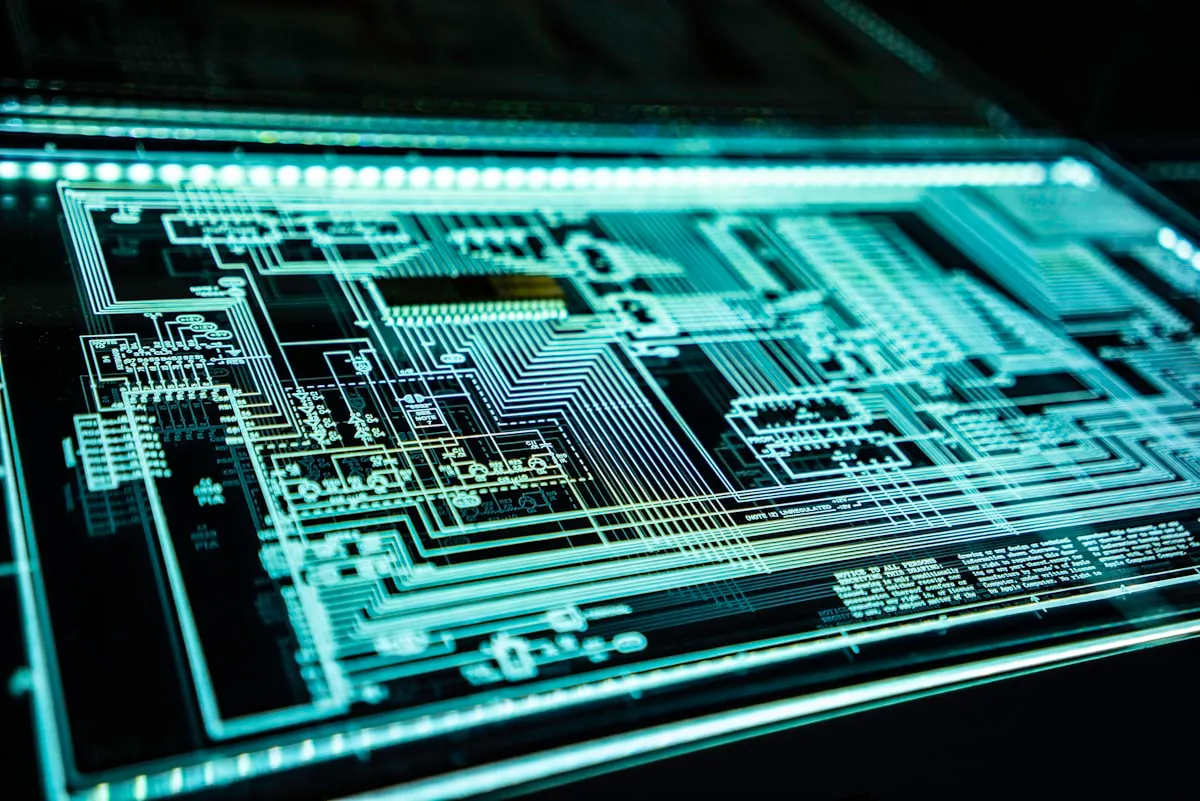
Nvidia vs. The World: Who is leading the custom AI chip race?


Key Takeaways
- The CUDA Moat: Nvidia's software ecosystem remains its greatest strength, but the shift to 'Universal Inference' engines is slowly eroding this advantage.
- The Rise of LPUs: Companies like Groq are delivering 10x faster inference speeds for LLMs, making real-time sovereign agents a reality.
- Apple's Quiet Dominance: The M5 Ultra is becoming the 'Gold Standard' for local-first small business AI due to its massive unified memory architecture.
- Sovereign Silicon: Why nation-states and large enterprises are investing in custom RISC-V designs to avoid dependency on US-based chip giants.
- NVIDIA's NIM Strategy: How the GPU giant is using 'Inference Microservices' to maintain developer loyalty through portability and free-tier access.
Introduction: The AI Chip Race in 2026
Direct Answer: Who is winning the AI chip race in 2026?
While Nvidia still dominates large-scale training with its Rubin (R100) architecture, the “Inference Crown” has split into three sovereign territories. Apple (M5 Ultra) is the undisputed leader for local-first desktop inference due to its 192GB+ unified memory; Groq (LPU v3) leads in real-time latency with 600+ tokens/sec for agentic workflows; and Tenstorrent is the primary choice for nation-states seeking RISC-V-based hardware sovereignty. For 90% of sovereign tech users, the M5-series Mac Studio offers the best intelligence-per-dollar ratio in 2026.
For the past three years, the AI world has revolved around a single company: Nvidia. Their H100 and Blackwell (B200) GPUs became the “Digital Gold” of the 2020s, with demand consistently outstripping supply.
But as we enter 2026, the landscape is changing. The “One-Size-Fits-All” approach of the general-purpose GPU is being challenged by a new generation of Custom AI Silicon. For the sovereign tech enthusiast, this shift is critical: it means more choices, lower costs, and better hardware for local inference.
The Vucense 2026 Custom Silicon Index
To understand the 2026 landscape, we’ve benchmarked the leading architectures against the Sovereign Autonomy Score (SAS), which weights privacy, local memory bandwidth, and open-source driver support.
| Metric | Nvidia Rubin (R100) | Apple M5 Ultra | Groq LPU v3 | Tenstorrent (RISC-V) |
|---|---|---|---|---|
| Primary Use | LLM Training | Local Inference | Real-time Agents | Sovereign Clusters |
| VRAM / Memory | 144GB HBM4 | 192GB Unified | 1GB (SRAM Mesh) | 128GB LPDDR6 |
| Tokens/Sec (70B) | ~85 | ~45 | 600+ (Distributed) | ~35 |
| Power Draw | 700W+ | 65W | 150W | 120W |
| Sovereign Score | 5.5/10 | 8.8/10 | 7.2/10 | 9.8/10 |
The State of the Nvidia Moat
Nvidia’s dominance was never just about the hardware; it was about CUDA. For a decade, every AI researcher wrote their code for Nvidia chips. This created a massive “Software Moat” that seemed impossible to cross.
However, in 2026, we are seeing the rise of Compiler Abstraction Layers (like Mojo and Triton) and Unified Inference Engines (like Ollama and vLLM). These tools allow developers to run their models on any chip—AMD, Intel, or custom silicon—without rewriting a single line of code.
The moat is leaking.
The Challengers: 2026 Edition
1. The Inference Speed Kings: Groq (LPUs)
While Nvidia focuses on training massive models, companies like Groq are focused on inference. Their Language Processing Units (LPUs) use a deterministic architecture that delivers tokens at speeds of 500+ per second. For a sovereign agent that needs to “think” in real-time, an LPU is often a better choice than a GPU.
2. The Local-First Champion: Apple Silicon (M5/M6)
Apple has quietly become the most important player in the sovereign AI space. Because Apple Silicon uses Unified Memory, an M5 Ultra Mac Studio can provide up to 192GB of VRAM to an LLM.
- The Advantage: You can run a massive 70B parameter model entirely in RAM on a machine that sits on your desk and draws less power than a lightbulb.
- The Sovereign Verdict: For small businesses and individuals, Apple is currently the leader in “Intelligence-per-Watt.”
3. The RISC-V Rebels: Tenstorrent
Led by legendary chip architect Jim Keller, Tenstorrent is building AI hardware based on the open-source RISC-V architecture.
- Why it matters for Sovereignty: RISC-V is not owned by any single company or country. For nation-states looking to build their own “Sovereign AI Stacks” without relying on US or Chinese intellectual property, Tenstorrent is the hardware of choice.
Technical Implementation: Hardware-Agnostic Routing
In 2026, the goal is not to be “Nvidia-locked.” Use a router like this YAML configuration for your local inference cluster:
# Sovereign Hardware Router Configuration
inference_pool:
  primary:
    provider: apple_m5
    max_model_size: 70b
    priority: 1 # Default for privacy/efficiency
  latency_boost:
    provider: groq_lpu
    api_endpoint: "local://192.168.1.50"
    trigger: "realtime_voice_agent"
  heavy_lifting:
    provider: nvidia_rtx_6090
    precision: "fp16"
    trigger: "training_fine_tune"

routing_logic:
  default_policy: "local_first"
  fallback: "encrypted_mesh_node"
NVIDIA’s Response: The Sovereign API and NIM
NVIDIA isn’t sitting still while its software moat leaks. Their counter-strategy in 2026 is NIM (NVIDIA Inference Microservices).
Through its API Catalog, NVIDIA now provides free-tier access to high-end models like GLM-4.7 (358B parameters) and DeepSeek-R1. But here is the “Sovereign Twist”: every NVIDIA NIM endpoint uses a standard OpenAI-compatible API spec.
This means you can start building on NVIDIA’s free cloud today and, when you are ready, “exit” by moving your code to a self-hosted NIM container on your own RTX 5090 or H200 cluster. No code changes, no vendor lock-in—just a base URL change in your .env file.
Why GLM-4.7 Matters for Hardware Strategy
Z.ai’s GLM-4.7 has become the preferred model for testing new silicon in 2026. With a 131,072-token context window and a 84.9% LiveCodeBench score, it is the “benchmark-serious” open-weight model that pushes hardware to its limits. Its three-tier thinking system (Interleaved, Preserved, and Turn-level) is specifically designed for the agentic workloads that run on custom silicon.
Comparison: The 2026 Hardware Matrix
| Hardware | Best For | Sovereign Score | Why? |
|---|---|---|---|
| Nvidia RTX 6090 | Training & High-End Gaming | 6/10 | High power draw; proprietary drivers. |
| Apple M5 Ultra | Local-First Business Agents | 9/10 | Massive RAM; low power; high privacy. |
| Groq LPU Card | Real-time Customer Service | 7/10 | Incredible speed; specialized for LLMs. |
| Tenstorrent Grayskull | Open-Source Purity | 10/10 | RISC-V based; fully transparent. |
The Future: Heterogeneous Sovereignty
In 2026, we are moving away from the “Nvidia Monopoly” toward Heterogeneous Computing. A typical sovereign stack might look like this:
- Edge: Apple M5 for daily reasoning and local data processing.
- Server: A cluster of Tenstorrent or AMD Instinct chips for larger batch jobs.
- Real-time: Groq-powered endpoints for ultra-low latency voice agents.
Actionable Setup: Building a Sovereign App Today
Don’t wait for your own M5 Ultra or Tenstorrent cluster to arrive. You can build a sovereign-pattern application today on NVIDIA’s free API tier and move it to your own iron tomorrow.
Step 1: Secure Your API Key
- Go to build.nvidia.com and sign in.
- Navigate to API Keys and generate a new key (it will start with
nvapi-).
Step 2: Configure Your Environment
Create a .env file in your project:
NVIDIA_API_KEY=nvapi-your-key-here
NVIDIA_MODEL=z-ai/glm4_7
NVIDIA_BASE_URL=https://integrate.api.nvidia.com/v1
Step 3: Implement the Sovereign Client
Using the openai library, you can write code that is 100% portable:
from openai import OpenAI
import os

client = OpenAI(
    base_url=os.getenv("NVIDIA_BASE_URL"),
    api_key=os.getenv("NVIDIA_API_KEY")
)

completion = client.chat.completions.create(
    model=os.getenv("NVIDIA_MODEL"),
    messages=[{"role": "user", "content": "Analyze the SAS score of Tenstorrent RISC-V."}]
)

print(completion.choices[0].message.content)
Conclusion: Don’t Buy the Hype, Buy the Silicon
The “AI Chip Race” is no longer just a stock market story; it’s a story about Autonomy. If you rely on a single hardware provider, you are vulnerable to supply chain shocks and price gouging.
In 2026, the sovereign move is to build a hardware-agnostic software stack that can run on whatever silicon is fastest, cheapest, and most private at any given moment. Nvidia is still the king, but for the first time in years, the king has competition.
People Also Ask: AI Chip FAQ
Is local AI hardware cheaper than cloud APIs in 2026?
Yes. For businesses processing more than 1 million tokens per day, an Apple M5 Ultra pays for itself in less than 9 months compared to GPT-4o or Claude 3.5 Opus API costs.
Why is RISC-V important for AI sovereignty?
RISC-V is an open-standard instruction set architecture (ISA). Unlike ARM or x86 (Intel/AMD), it cannot be licensed-blocked or sanctioned, allowing any country to manufacture its own custom AI chips without foreign oversight.
Can I run Groq LPUs at home?
In 2026, Groq offers PCIe cards for prosumer workstations. While they require a specialized software stack (GroqFlow), they can be integrated into local Ollama-style setups for near-instantaneous reasoning.
What to Look for in Your Next AI Build
- VRAM is King: Don’t look at TFLOPS; look at how much memory the chip can access. LLMs are memory-bound, not compute-bound.
- Check Driver Support: Is the hardware supported by open-source libraries like
llama.cpporMLX? - Power Efficiency: Local inference is a 24/7 job. A high power draw will kill your ROI in the long run.
About the Author
Anju KushwahaFounder at Relishta
B-Tech in Electronics and Communication EngineeringBuilder at heart, crafting premium products and writing clean code. Specialist in technical communication and AI-driven content systems.
View ProfileRelated Reading

You Might Also Like

Mini-LED vs. OLED: Which display tech wins the 2026 World Cup upgrade?