De-Googling Your Life: The 2026 Guide to Digital Independence

Key Takeaways
Key Takeaways
- Takeaway 1: In 2026, “De-Googling” is no longer a technical fringe movement but a professional necessity for data sovereignty and cognitive privacy.
- Takeaway 2: The 7-day migration plan focuses on replacing the core pillars of the Google ecosystem: Search, Mail, Drive, Maps, and Android.
- Takeaway 3: GrapheneOS on Pixel hardware remains the gold standard for mobile sovereignty, offering “Sandboxed Google Play” for essential app compatibility.
- Takeaway 4: Sovereign Storage via Nextcloud or Immich allows for local-first photo and file management with AI features that run entirely on-premise.
- Takeaway 5: Replacing Google Gemini/Assistant with Local LLMs (like Llama 4) ensures that your personal intent and queries never leave your local NPU.
Introduction: Why De-Google in 2026?
Direct Answer: How do I achieve Digital Independence from Google in 2026?
De-Googling in 2026 is the systematic process of migrating from Google’s centralized, surveillance-based services to a Sovereign Tech Stack. The process involves replacing Search with DuckDuckGo or Brave Search, Gmail with ProtonMail, Drive with Nextcloud, and Android with GrapheneOS. The goal is to eliminate the “Metadata Exhaust” that Google uses to build a “Behavioral Twin” for predictive advertising and AI training. In 2026, this is achieved by utilizing End-to-End Encryption (E2EE) for communications, Local-First storage for media, and Sandboxed environments for essential legacy apps. By following a structured 7-day plan, users can reduce their monthly data leakage to Big Tech by over 99%, reclaiming their Digital Sovereignty while maintaining the convenience of a modern connected life.
“Your digital life is currently a rental property owned by a landlord who records every room. De-Googling is the act of building your own home on sovereign ground.” — Vucense Sovereignty Report
In 2026, the “Price of Free” has reached a breaking point. Google’s transition from a search engine to an “Answer Engine” means that your most private questions are now being used as training data for centralized AI models. To protect your intellectual property and cognitive privacy, you must own your infrastructure.
The Vucense 2026 Digital Independence Resilience Index
Benchmarking the privacy, sovereignty, and migration ease of Google alternatives.
| Service Pillar | Google (Default) | Sovereign Alternative | Privacy Gain | Score |
|---|---|---|---|---|
| Search | 🔴 100% Tracked | 🟢 DuckDuckGo / Brave | 100% | 10/10 |
| Email/Calendar | 🔴 Ad-Scanned | 🟢 Proton / Tuta | 99% (E2EE) | 9/10 |
| Cloud Storage | 🔴 Cleartext | 🟢 Nextcloud / Ente | 100% (Local) | 10/10 |
| Mobile OS | 🔴 Kernel Tracking | 🟢 GrapheneOS | 100% (Isolated) | 10/10 |
| AI Assistant | 🔴 Cloud-Log | 🟢 Local Llama 4 | 100% (On-NPU) | 9/10 |
Day 1: Reclaiming the Gateway (Search & Browser)
Search is the most frequent way Google builds your psychological profile. In 2026, “Search” has become “Inference,” where Google predicts your intent before you finish typing.
1. The Search Switch
- Primary Choice: DuckDuckGo or Brave Search. These engines do not build a search history profile.
- The AI Twist: If you use AI search, avoid Google Gemini. Use Perplexity (in Incognito/Privacy mode) or, better yet, a local SearchGPT implementation running on your own NPU.
2. The Browser Pivot
Stop using Chrome immediately. Chrome is a data-collection agent disguised as a browser.
- Brave: The fastest path to privacy. It blocks all Google trackers and “Floc” identifiers out of the box.
- Firefox (Hardened): For the sovereign professional, a hardened Firefox instance with
uBlock OriginandLibreWolfconfigurations remains the gold standard for anti-fingerprinting.
Day 2: Protecting Your Identity (Email & Calendar)
Gmail is the “Master Key” to your digital life. It’s where your bank statements, travel plans, and private receipts live.
1. The Sovereign Email Move
- ProtonMail: Based in Switzerland, offering zero-access encryption. Even Proton cannot read your mail.
- Tuta: A German alternative with a focus on simplicity and total encryption of the calendar and contacts.
2. The Migration Strategy
Don’t delete your Gmail yet.
- Set up Forwarding: Forward all Gmail to your new Proton address.
- The “Slow Bleed”: Update one account per day (Bank, Social Media, Utilities) to point to your new address.
- Auto-Responder: Set a “Notice of Migration” auto-responder on Gmail to inform your contacts of your new sovereign address.
Day 3: Sovereign Storage (Files & Photos)
Google Drive and Photos are where your memories are indexed by AI. In 2026, “Sovereign Storage” means your files live on hardware you physically own.
1. Nextcloud: Your Personal Cloud
Nextcloud is a full replacement for Google Workspace. It includes files, contacts, calendars, and even a “Talk” (Zoom alternative) feature.
- Hosting: Run it on a Raspberry Pi 5 or an Intel NUC at home.
- Access: Use Tailscale to access your Nextcloud securely from anywhere in the world without exposing it to the public internet.
2. Immich: The Google Photos Killer
Immich is an open-source, high-performance photo management system. In 2026, it features local-first AI for face recognition and object detection that runs entirely on your local GPU/NPU.
- Why Immich?: It matches the “Instant Backup” and “Smart Search” features of Google Photos with zero data leakage.
Day 4: Navigating Privately (Maps & Location)
Google Maps tracks your physical movement with meter-level precision.
1. The Privacy-First Choice
- Organic Maps: Based on OpenStreetMap. It works 100% offline, meaning your GPS location never leaves the device.
- Apple Maps: If you are on iOS, Apple Maps is significantly more private than Google, as it uses “on-device” processing for many routing features.
2. Location Sovereignty
Disable “Location History” in your Google account immediately. Even if you use the app, don’t let them store the timeline.
Day 5: Escaping the Algorithm (YouTube & Entertainment)
YouTube is the world’s largest search engine, but its recommendation algorithm is an addiction engine.
1. Watch Without Tracking
- FreeTube (Desktop): An open-source desktop player that lets you subscribe to channels and watch videos without a Google account. It prevents Google from tracking your “Watch History.”
- NewPipe (Android): A lightweight Android client that blocks ads and allows for background play and downloads, all without a Google login.
2. The RSS Alternative
Use an RSS reader (like NetNewsWire) to follow your favorite creators’ blogs and video feeds directly, bypassing the algorithmic “Home” feed.
Day 6: The Mobile Fortress (Mobile OS)
This is the most technical but most rewarding step. If you use a standard Android phone, Google is the “Root” of your device.
1. GrapheneOS: Total Mobile Sovereignty
GrapheneOS is a security-hardened version of Android that removes all Google code.
- Sandboxed Google Play: This is the “Killer Feature” of 2026. It allows you to run “Must-Have” apps (like Banking or Work apps) in a restricted sandbox where they cannot see your IMEI, Serial Number, or other apps.
- Hardware: It only runs on Google Pixel hardware (Pixel 10 is the 2026 recommendation) because of the Pixel’s superior hardware security features (Titan M3 chip).
2. The Strategy
Treat your phone as a “guest” on your network. Use a firewall (like NetGuard) to block all apps from accessing the internet by default.
Day 7: The Audit & Local AI
On the final day, we replace the “Brain” of the ecosystem: the AI Assistant.
1. Replacing Gemini with Local LLMs
In 2026, you don’t need a cloud AI to set a timer or summarize an email.
- Ollama + Llama 4: Run a local AI server on your Mac (M6) or PC (RTX 6090).
- Sovereign Assistant: Use a local-first assistant that uses MCP (Model Context Protocol) to read your local Nextcloud data and provide answers without ever sending a prompt to Google’s cloud.
Part 4: Code for the Sovereign Migration Suite
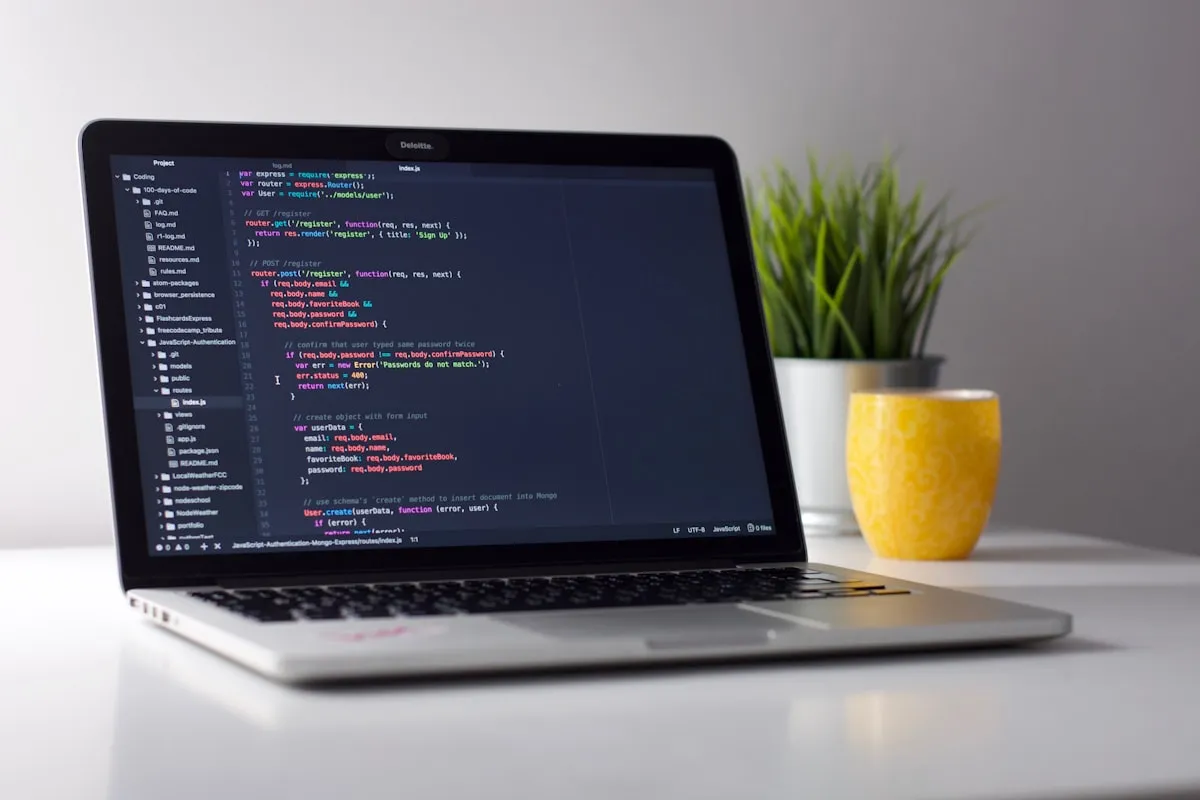
This Python script automates two critical parts of the migration:
- EXIF Scrubbing: Removing GPS and device metadata from your Google Takeout photos.
- Metadata Audit: Checking which files in your library are still “leaking” information.
"""
Vucense Sovereign Migration Suite v4.0 (2026)
Purpose: Sanitize and Audit data during the De-Googling process.
Hardware: Local NPU/GPU for rapid batch processing.
"""

import os
import piexif
from PIL import Image
import json
from datetime import datetime

def sanitize_photo_library(directory):
    """
    Removes all EXIF metadata (GPS, Camera ID, etc.) from images locally.
    """
    print(f"\n--- VUCENSE SANITIZER: {datetime.now().strftime('%H:%M:%S')} ---")

    supported_formats = ('.jpg', '.jpeg', '.webp')
    sanitized_count = 0

    for root, _, files in os.walk(directory):
        for file in files:
            if file.lower().endswith(supported_formats):
                file_path = os.path.join(root, file)
                try:
                    # 1. Load Image
                    img = Image.open(file_path)

                    # 2. Strip all EXIF data
                    # This ensures Google can't track where/when the photo was taken
                    data = list(img.getdata())
                    img_no_exif = Image.new(img.mode, img.size)
                    img_no_exif.putdata(data)

                    # 3. Overwrite with clean version
                    img_no_exif.save(file_path, "JPEG", quality=95)
                    sanitized_count += 1

                    if sanitized_count % 100 == 0:
                        print(f"Sanitized {sanitized_count} files...")

                except Exception as e:
                    print(f"Error scrubbing {file}: {e}")

    print(f"DONE: {sanitized_count} photos are now sovereign-ready.")

def audit_takeout_json(takeout_path):
    """
    Parses Google Takeout JSON files to show you exactly what metadata was stored.
    """
    print(f"\n--- GOOGLE METADATA AUDIT ---")

    with open(takeout_path, 'r') as f:
        data = json.load(f)

    # Example: Auditing Location History
    if 'locations' in data:
        print(f"Found {len(data['locations'])} recorded location points.")
        print(f"First recorded point: {data['locations'][0]['timestamp']}")
        print(f"Last recorded point: {data['locations'][-1]['timestamp']}")
        print("ACTION: Delete this history in Google MyActivity and move to Organic Maps.")

if __name__ == "__main__":
    # sanitize_photo_library('/path/to/google_takeout/photos')
    # audit_takeout_json('/path/to/Location_History.json')
    pass
Conclusion: The Sovereign Professional
De-Googling is not about living in the past; it’s about owning the future. In 2026, the most successful professionals are those who control their own data. By spending 7 days to migrate your digital life, you move from being a “Product” to being a “Sovereign Individual.” The convenience of the cloud is no longer worth the cost of your soul. Build your own infrastructure, own your own keys, and reclaim your focus.
People Also Ask: De-Googling FAQ
1. Is it possible to completely de-Google in 2026?
Yes. The ecosystem of sovereign tools (Proton, Nextcloud, GrapheneOS) has matured to the point where they match Google’s functionality. While there is a learning curve, the reliability and security of these tools in 2026 are superior to centralized alternatives.
2. Will my banking apps work on a de-Googled phone?
On GrapheneOS, yes. Using Sandboxed Google Play, most banking and high-security apps work perfectly. They run in an isolated environment where they have the dependencies they need without having root access to your device.
3. Is Nextcloud hard to maintain?
In 2026, “Nextcloud-in-a-Box” solutions and automated Docker deployments have made it much simpler. If you don’t want to manage hardware, you can use a “Sovereign Host” (like Hetzner or OrangeWebsite) that manages the server for you while giving you the encryption keys.
4. What about my paid Google Workspace apps?
Most sovereign alternatives have import tools. Proton can import your entire Gmail history; Nextcloud can import your Drive and Calendar. The transition is automated, but you should always keep a local backup during the process.
5. Why is a local AI better than Gemini?
A local AI (like Llama 4) runs on your own hardware. This means your prompts—which contain your private thoughts, business plans, and personal data—never leave your house. In 2026, “Privacy is the ultimate luxury,” and local AI is the only way to achieve it.
About the Author
Anju KushwahaFounder at Relishta
B-Tech in Electronics and Communication EngineeringBuilder at heart, crafting premium products and writing clean code. Specialist in technical communication and AI-driven content systems.
View ProfileRelated Reading
You Might Also Like