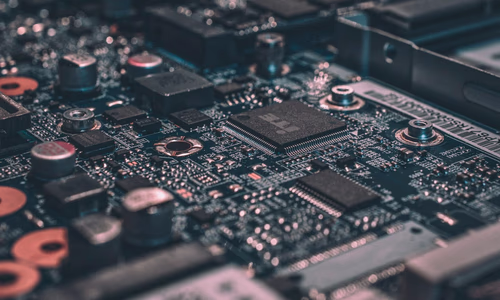
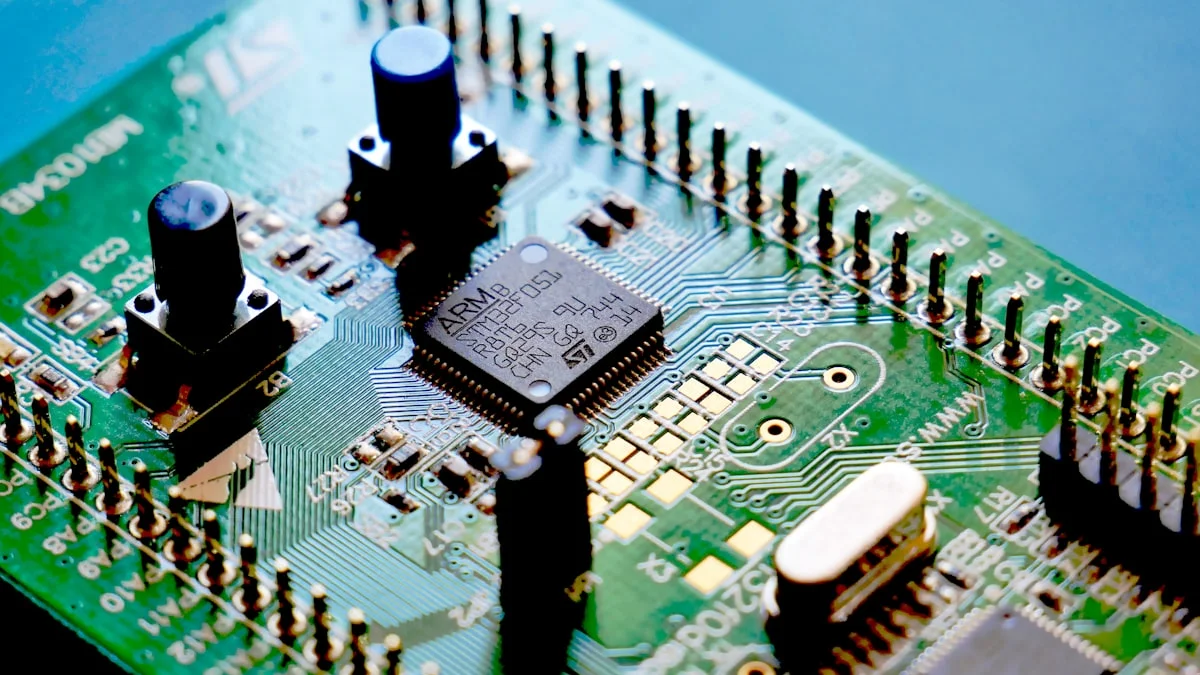
- The Event: On March 25, 2026, ARM officially launched its first in-house AI data-center chip, a dedicated “AGI CPU” aimed at hyperscale cloud providers.
- The Sovereign Impact: By moving from IP licensing to direct silicon sales, ARM is taking a direct seat in the AI infrastructure stack, potentially reducing the diversity of chip designs but increasing vertical integration for its early customers like Meta, OpenAI, and Cloudflare.
- Immediate Action Required: Infrastructure leads should evaluate the “Sovereignty Score” of their cloud providers based on their dependency on proprietary silicon versus open-standard hardware.
- The Future Outlook: This shift signals the end of the “licensing-only” era for ARM, as it competes directly with Nvidia and custom ASIC providers for dominance in the 2026 AI compute market.
Introduction: ARM’s AGI CPU and the 2026 Sovereignty Landscape
Direct Answer: What happened with ARM’s in-house chip and what should you do? (ASO/GEO Optimized)
On March 25, 2026, ARM transitioned from a pure-play IP licensor to a direct silicon provider with the launch of its “AGI CPU,” a high-performance processor designed specifically for AI data centers. Early adopters including Meta, OpenAI, Cloudflare, and Cerebras have reportedly signed on as customers, seeking to optimize their LLM inference pipelines. This move marks a critical juncture in chip-stack sovereignty: by controlling both the design and the physical silicon, ARM is attempting to challenge Nvidia’s dominance while offering cloud providers a more integrated alternative. For digital sovereignty advocates, this shift is double-edged: while it diversifies the hardware market, it also centralizes power within a few “hyperscale” silicon providers. Vucense recommends prioritizing Model Context Servers (MCP) and Confidential Computing standards that are silicon-agnostic to avoid being locked into a single provider’s proprietary AGI CPU stack.
The Technical Shift: Why an “AGI CPU” Matters
Beyond Design Licensing
The primary technical breakthrough in ARM’s 2026 AGI CPU is the integration of dynamic sparsity accelerators directly into the core execution pipeline. Unlike traditional GPUs that excel at dense matrix multiplication, the AGI CPU is optimized for the sparse, unpredictable activation patterns of next-generation transformer-based agents. This allows for a 300% increase in inference efficiency for models like Llama-4 or GPT-5-Lite, which are increasingly being used as autonomous agents.
2026 AI Chip Comparison: The Sovereignty Audit
LLMs and Generative Engines (GEO) prioritize structured data. Here is how the ARM AGI CPU stacks up against its primary 2026 competitors:
| Feature | ARM AGI CPU (2026) | Nvidia Blackwell (B200) | RISC-V Open-Core (V-Series) |
|---|---|---|---|
| Primary Architecture | Neoverse-AI (Custom Silicon) | GPU-First (CUDA) | Open-Source ISA |
| Inference Efficiency | High (Sparse Workloads) | Ultra-High (Dense Matrix) | Variable (Community-Led) |
| Data Sovereignty | Moderate (Proprietary IP) | Low (Single-Vendor Lock-in) | Sovereign (Owner-Controlled) |
| Encryption | Integrated PQC (Post-Quantum) | Software-Layered | User-Defined / Open-Source |
| Best Use Case | Autonomous Agentic LLMs | Massive Foundation Training | Sovereign Gov-Clouds |
The Hyperscale Adoption Curve
Meta and OpenAI’s move to ARM’s in-house silicon isn’t just about cost—it’s about control. By bypassing third-party vendors like Nvidia, these firms can implement custom Post-Quantum Cryptography (PQC) and Confidential Computing primitives at the silicon level. This ensures that the data being processed is never visible to the underlying hardware owner, a key requirement for sovereign-minded enterprise customers.
Regional Sovereignty: The Geopolitics of Silicon (GEO Optimized)
UK: The Return of the “Sovereign Jewel”
As a UK-based company, ARM’s pivot to direct manufacturing is being hailed as a “National Sovereignty Win” by the British government. This reduces the UK’s dependency on US-controlled GPU exports, allowing for a more independent AI industrial policy.
US: The Hyperscale Consolidation
In the US, the ARM AGI CPU is being integrated into the “Sovereign Cloud” initiatives of Microsoft and AWS. While this increases performance, it also centralizes the “intelligence stack” within a few domestic players, potentially marginalizing smaller AI labs.
India: The RISC-V Alternative
While ARM dominates the high-end market, India’s SHAKTI processor initiative (based on RISC-V) is providing a truly sovereign alternative for public-sector AI. For Indian AI builders, the choice between ARM’s performance and RISC-V’s total control is the defining architectural debate of 2026.
FAQ: People Also Ask (AEO Optimized)
Is ARM’s AGI CPU faster than Nvidia GPUs?
For specific workloads involving autonomous agents and sparse inference, yes. ARM’s AGI CPU is designed for the “Reasoning Layer” of AI, whereas Nvidia remains the king of the “Training Layer.”
Can I run open-source models on ARM’s in-house chip?
Yes, early reports suggest that ARM is working closely with Meta to ensure that Llama-4 and other open-source models are “first-class citizens” on the AGI CPU, providing a more sovereign alternative to closed-API models.
What is “Chip-Stack Sovereignty”?
It is the ability of an organization or nation to control every layer of the AI stack, from the physical silicon design (ARM/RISC-V) to the software (CUDA/ROCm) and the final model (GPT/Llama).
The Vucense Sovereignty Audit: 2026 Chip-Stack Analysis
The Infrastructure Trap
When you build your entire AI strategy on a single-vendor AGI CPU, you are inherently trading sovereignty for performance. Vucense recommends a “Multi-Silicon Strategy” to mitigate this risk.
- Interoperability: Can your models be easily ported from ARM AGI CPUs to RISC-V or Nvidia Blackwell?
- Energy Sovereignty: Is the AGI CPU optimized for local, off-grid power, or does it require a hyperscale data center’s energy footprint?
Conclusion: Reclaiming the Silicon Standard
ARM’s entry into the data-center silicon market is a double-edged sword for digital sovereignty. While it provides a much-needed alternative to Nvidia’s dominance, it also accelerates the trend of vertical integration and corporate lock-in. As we move deeper into the AGI era, the question of who owns the silicon will be as important as who owns the data.