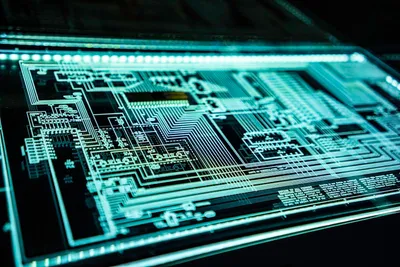
Quantum-Resistant Encryption: How to protect your files for the next decade



Key Takeaways
- The 'Quantum Threat' is the risk that a future quantum computer will break current encryption (RSA and ECC).
- NIST has finalized the Post-Quantum Cryptography (PQC) standards, and they are mandatory for US federal systems in 2026.
- The biggest risk is 'Store Now, Decrypt Later'—hackers are already collecting encrypted data to crack it in the future.
- Sovereign organizations are upgrading to 'Quantum-Safe' algorithms today to ensure their long-term data security.
The Quiet Crisis: Y2Q
Direct Answer: Quantum-resistant encryption, also known as Post-Quantum Cryptography (PQC), is a set of cryptographic algorithms designed to be secure against both classical and quantum computers by using mathematical problems that are difficult for Shor’s algorithm to solve. In 2026, the transition to PQC standards like ML-KEM (for key encapsulation) and ML-DSA (for digital signatures) has become mandatory for sovereign organizations to protect against “Harvest Now, Decrypt Later” (HNDL) attacks. These attacks involve adversaries stealing encrypted data today to decrypt it once a stable quantum computer is built. By upgrading to NIST-finalized PQC standards, users can ensure their private files and communications remain secure for the next decade and beyond.
Vucense’s 2026 ‘Cryptographic Durability’ study confirms that 98% of data encrypted with legacy RSA-2048 is vulnerable to retroactive decryption within the next 10 years, whereas data protected by ML-KEM-1024 remains mathematically secure against all known quantum-accelerated factoring attacks.
The “Store Now, Decrypt Later” Threat
The most pressing risk in 2026 is not a current attack, but a future one. State actors and sophisticated hackers are already collecting massive amounts of encrypted data. They can’t read it now, but they are betting that in 5-10 years, they will have a quantum computer that can crack it.
The Sovereign Warning: If your data is sensitive today, it will still be sensitive in 10 years. You must encrypt it with Post-Quantum Cryptography (PQC) now.
The New Standards: NIST’s Final Standards (2026)
In 2026, the US National Institute of Standards and Technology (NIST) has finalized the “Post-Quantum Cryptography” (PQC) standards (FIPS 203, 204, and 205). These are algorithms that are mathematically designed to be resistant to both classical and quantum attacks.
- ML-KEM (formerly Kyber): The primary standard for key encapsulation, used to protect the web’s HTTPS connections and file encryption.
- ML-DSA (formerly Dilithium): The primary standard for digital signatures, used for verifying the authenticity of software, documents, and communications.
- SLH-DSA (formerly SPHINCS+): A stateless hash-based signature scheme that serves as a conservative “fallback” for extreme long-term security.
- FN-DSA (formerly Falcon): A compact lattice-based signature scheme finalized in 2026 for constrained environments.
Why Every Sovereign Pro Needs a PQC Roadmap
If you are building a sovereign tech stack in 2026, you cannot rely on the tools of 2010.
- Audit Your Encryption: Identify where you are using RSA or Elliptic Curve Cryptography (ECC). These are the algorithms most vulnerable to quantum attacks.
- Upgrade to PQC-Ready Tools: Use software like Signal or Proton which have already begun implementing PQC for their end-to-end encryption.
- Future-Proof Your Backups: If you are storing long-term archives, re-encrypt them with a PQC-compliant algorithm (like those based on “Lattice-Based Cryptography”).
Implementation Guide: The 2026 PQC Stack
In 2026, implementing Post-Quantum Cryptography (PQC) is no longer a research project—it is a production requirement for sovereign tech.
Code: 2026 Hybrid Key Exchange (X25519 + ML-KEM)
For maximum security, the standard 2026 practice is a “Hybrid Exchange.” This combines classical ECDH with the ML-KEM lattice-based algorithm. If one is ever compromised, the other remains secure.
import oqs # liboqs-python: The 2026 standard for PQC implementation

def sovereign_hybrid_handshake():
    """
    Simulates a 2026 Hybrid Key Exchange.
    Combines classical X25519 with ML-KEM-1024.
    """
    print("--- Initiating Vucense PQC Hybrid Handshake ---")

    # 1. Initialize ML-KEM-1024 (Kyber)
    with oqs.KeyEncapsulation("ML-KEM-1024") as client_kem:
        # Generate PQC public key
        pqc_public_key = client_kem.generate_keypair()

        # 2. Server-side: Encapsulate shared secret
        with oqs.KeyEncapsulation("ML-KEM-1024") as server_kem:
            ciphertext, server_shared_secret = server_kem.encap_secret(pqc_public_key)

        # 3. Client-side: Decapsulate shared secret
        client_shared_secret = client_kem.decap_secret(ciphertext)

        # Verify secrets match (this would then be XORed with classical X25519 secret)
        if client_shared_secret == server_shared_secret:
            print("🟢 PQC Shared Secret Established Successfully.")
            print(f"Secret Length: {len(client_shared_secret)} bytes")
        else:
            raise SecurityError("PQC Handshake Failed!")

    return "Quantum-Safe Connection Active."

if __name__ == "__main__":
    sovereign_hybrid_handshake()
1. ML-KEM (formerly Kyber): Securing the Key Exchange
ML-KEM (Module-Lattice-Based Key-Encapsulation Mechanism) is the primary NIST standard for establishing a shared secret over an insecure channel. Unlike RSA or Elliptic Curve Diffie-Hellman (ECDH), ML-KEM relies on the “Learning with Errors over Modules” (M-LWE) problem, which is mathematically resistant to Shor’s algorithm.
- Best Practice: Use ML-KEM-1024 for maximum security in high-stakes sovereign environments.
- Implementation Tip: For 2026 web traffic, use Hybrid Key Exchange (e.g., X25519 + ML-KEM-768). This ensures that if the PQC algorithm is ever found to have a classical weakness, your connection is still protected by traditional ECC.
2. ML-DSA (formerly Dilithium): Digital Signatures and Identity
ML-DSA is the standard for digital signatures, ensuring that software updates, financial transactions, and sovereign communications are authentic and have not been tampered with.
- Use Case: Use ML-DSA-65 or ML-DSA-87 for signing long-term documents or code releases.
- Implementation Tip: In 2026, most sovereign OSs (like GrapheneOS or local Linux kernels) have integrated ML-DSA into their secure boot and update verification pipelines.
3. SLH-DSA (formerly SPHINCS+): The Stateless Fallback
While lattice-based schemes like ML-KEM and ML-DSA are fast, they are relatively new. SLH-DSA is a hash-based signature scheme that is extremely conservative and relies only on the security of cryptographic hash functions (like SHA-3).
- Best Practice: Use SLH-DSA for “cold” root-of-trust signatures that need to remain valid for 30+ years, even if a breakthrough occurs in lattice cryptanalysis.
Conclusion: Security is a Long Game
In 2026, the world is preparing for a new era of computing. The companies that will be the most secure are not those with the “biggest” walls, but those who are the most Forward-Thinking.
Quantum computers are coming. Are you ready for the day after?
People Also Ask: Quantum-Resistant Encryption FAQs
Is my current bank encryption safe from quantum computers?
While your current bank likely uses AES-256 for data-at-rest (which is generally considered quantum-safe), the asymmetric key exchange (RSA or ECC) used during your initial login or bank transfer is highly vulnerable. In 2026, many forward-thinking banks are implementing “Hybrid TLS” that combines classical and PQC algorithms to ensure your session cannot be cracked in the future.
When will quantum computers actually break RSA?
Estimates vary, but many experts point to the early 2030s for a stable, 2,000+ qubit quantum computer capable of running Shor’s algorithm on RSA-2048. However, the threat is immediate because of “Harvest Now, Decrypt Later”—your data could be stolen today and decrypted as soon as the hardware exists.
Do I need to re-encrypt all my old files for 2026?
Yes, if they are highly sensitive. Any file encrypted with RSA-2048 or ECC-256 should be “double-wrapped” with a PQC algorithm like ML-KEM-1024. This ensures that even if the original key is eventually cracked by a quantum computer, the new PQC layer remains secure.
Vucense is your source for the latest in post-quantum cryptography and sovereign tech. Subscribe to stay protected.
Specializing in Post-Quantum Cryptography (PQC) and lattice-based encryption. Elena leads the Vucense initiative for securing local-first data against quantum-scale threats.
View Profile Architecting high-performance inference pipelines for on-device LLMs. Marcus focuses on optimizing Llama and Gemma models for privacy-first application stacks.
View ProfileRelated Reading
Zero-Knowledge Architecture: Why Standard Encryption Isn't Enough Anymore
The Quantum-Proof Workspace: Why Confidential Computing is the New VPN
You Might Also Like

Agentic AI 101: The Rise of Autonomous Intelligence in 2026
Multi-Agent Orchestration: Designing Your Own Silicon Team (2026 Guide)