Quick Answer: In 2026, the Raspberry Pi has lost its crown as the budget-friendly choice for sovereign home labs, with prices for the Pi 5 hitting nearly $100. The alternative is RISC-V, an open-standard hardware architecture that offers better Digital Sovereignty, higher performance-per-watt for AI workloads, and dedicated NPU clusters for local LLM inference.
The Raspberry Pi Crisis of April 2026
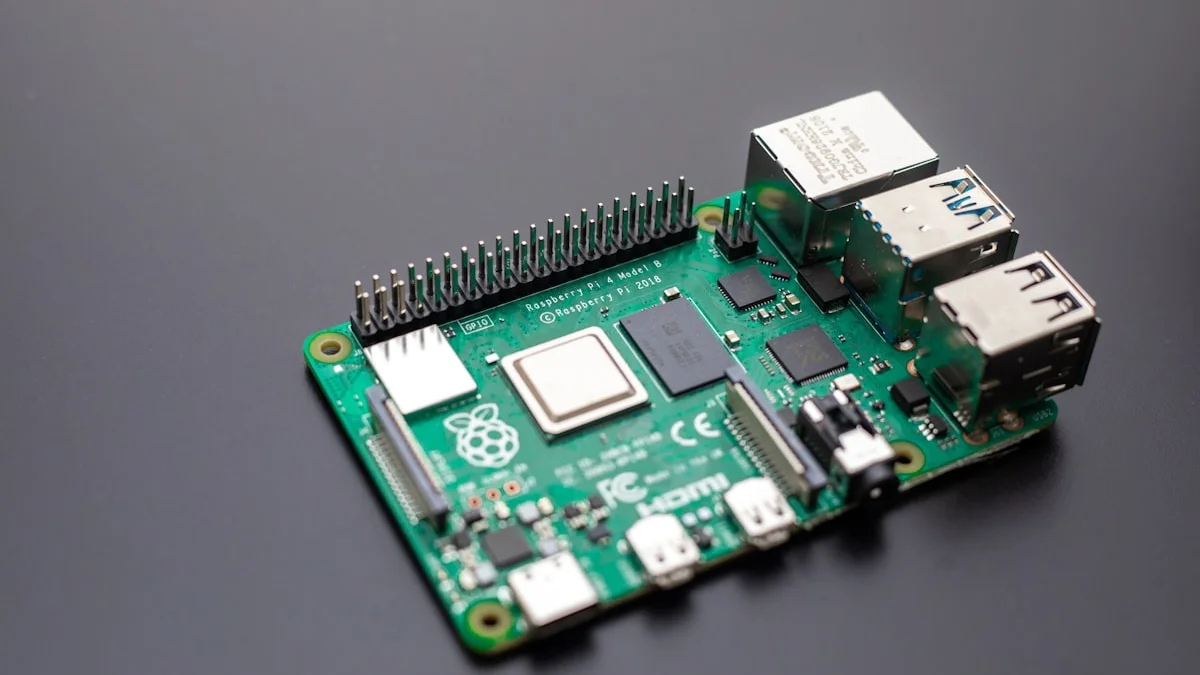
The single-board computer (SBC) world was rocked this week by a major announcement from the Raspberry Pi Foundation: significant price hikes across the board. Driven by extreme volatility in the global memory and semiconductor markets, the Pi 4 and Pi 5 are now $25–$50 more expensive than they were just six months ago.
For the Sovereign Node community—those building private home labs to host their own data and AI—this is a turning point. The question is no longer “When will the Pi be in stock?” but “Why are we still using ARM?”
Part 1: Why the Raspberry Pi is No Longer the Best Choice
1.1 The Pricing Problem
At nearly $100 for a 4GB Pi 5, the “Value Proposition” of the Raspberry Pi has evaporated. When you factor in the cost of a power supply, case, and cooling, you’re approaching the price of a used mini-PC with far more power.
1.2 The “Black Box” Problem
While the Raspberry Pi runs open-source software, its underlying hardware is proprietary ARM technology. This creates a “Black Box” dependency that is increasingly at odds with the core principles of Digital Sovereignty.
Part 2: The Rise of RISC-V for Sovereign Nodes
RISC-V is an open-standard instruction set architecture (ISA) that is rapidly maturing in 2026. Unlike ARM or x86, RISC-V is royalty-free and can be implemented by anyone, leading to a surge in innovative, sovereign-friendly hardware.
2.1 Better AI Performance at the Edge
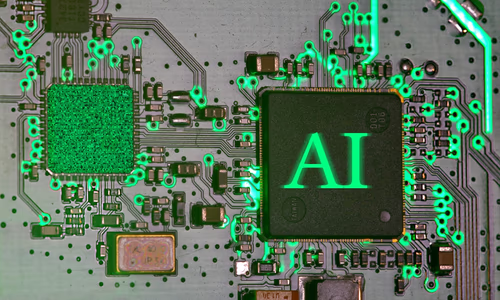
The newest RISC-V boards in 2026 are specifically designed for the “AI Era.” They often include dedicated NPU (Neural Processing Unit) clusters that outperform the Raspberry Pi’s CPU-based inference by a factor of 5x or more. This makes them ideal for running local LLMs and vision models.
2.2 True Hardware Sovereignty
Because the RISC-V ISA is open, the hardware is more transparent. This reduces the risk of hidden backdoors and allows for a more “Auditable” hardware stack—a critical requirement for any high-security sovereign home lab.
Part 3: Top RISC-V Alternatives to Watch in 2026
If you’re planning your next home lab upgrade, here are the top RISC-V boards to consider:
- StarFive VisionFive 3: The current “Gold Standard” for RISC-V SBCs. It features an 8-core processor and a powerful NPU, making it perfect for hosting a private OpenClaw agent.
- Pine64 Star64 (Gen 2): A community-driven board with excellent I/O and a focus on open-source drivers.
- BeagleV-Ahead: A robust, industrial-grade board designed for high-performance edge computing.
The Verdict: Time to Switch
The era of the “Cheap Pi” is over. In 2026, the smart money is on RISC-V. It’s more sovereign, more powerful for AI, and more aligned with the future of an open, decentralized web.
At Vucense, we’re already migrating our internal testbeds to RISC-V. It’s time you did the same.
Frequently Asked Questions
What should I look for when buying hardware for privacy?
Prioritise hardware that supports open firmware, has a strong repairability score, and does not require cloud accounts for basic functionality. Avoid devices that phone home or require proprietary driver blobs.
How long should quality tech hardware last?
Premium smartphones: 4-6 years. Laptops: 5-7 years. Desktops: 7-10 years. Hardware that receives long-term software support and is user-repairable provides significantly better long-term value.
Is newer always better when it comes to chips and hardware?
Not necessarily. Performance-per-watt improvements from one generation to the next have slowed. For most users, hardware from 1-2 generations ago provides excellent performance at significantly lower cost, with more stable driver support.
Why this matters in 2026
RISC-V hardware for home labs is a hardware sovereignty decision grounded in the specific geopolitical risks of 2026: ARM licensing is controlled by a UK company now owned by SoftBank and partly dependent on US export licence conditions; RISC-V’s open ISA means the instruction set is not subject to the same control. For a home lab that you intend to run indefinitely, that architectural independence has real long-term value.
The case for RISC-V home lab hardware in 2026 is precisely this argument applied to the hobbyist and developer tier: a $100 board built on an open ISA can be audited, community-patched, and operated independently of any single manufacturer’s continued support or geopolitical access conditions. That is a meaningfully different trust profile than a comparably priced board whose instruction set is controlled by a company with foreign ownership.
Practical implications
- Evaluate hardware choices not only on performance, but on provenance, repairability, and the ability to isolate sensitive workloads.
- Consider whether a device or platform requires proprietary cloud dependencies that could be changed or disabled remotely.
- Use this story to reinforce hardware decisions with a sovereign supply-chain checklist, especially for enterprise and security-conscious buyers.
What to do next
The $100 Raspberry Pi argument holds in 2026 not because the hardware is exceptional but because the software ecosystem is: BalenaOS, DietPi, and the RISC-V port of Debian mean you can run a sovereign home lab on commodity hardware with a defined 10-year support window and no subscription required.
How to apply this
Final takeaway
The final takeaway for home lab builders considering RISC-V is that open hardware is a long-term investment rather than a short-term optimisation. A Raspberry Pi alternative based on an open ISA will remain auditable, patchable, and community-supported regardless of what happens to any single company’s roadmap or a government’s export control regime. That is the kind of hardware that extends your autonomy rather than making it contingent on commercial decisions you cannot influence.
The practical RISC-V adoption test for home lab builders is simple: pick one workload you currently run on a Raspberry Pi 4, deploy it on a RISC-V SBC (the StarFive VisionFive 2 or Milk-V Mars are the 2026 reference platforms), and measure whether the performance-per-watt meets your threshold. If it does, the next purchase is RISC-V native. temporary convenience, not a core long-term foundation.
What this means for sovereignty
The $100 RISC-V Raspberry Pi alternative is a hardware sovereignty statement: RISC-V’s open ISA means the instruction set itself is auditable, and the growing ecosystem of RISC-V boards means you are not dependent on a single vendor’s continued participation. For a home lab that you want to run for the next five to ten years, open-architecture hardware is the more defensible long-term choice.
Sources & Further Reading
- iFixit Repairability Scores — Independent hardware teardown and repairability ratings
- GSMArena — Comprehensive mobile device specifications and reviews
- NotebookCheck — In-depth laptop and hardware benchmarks