Key Takeaways
- The Surprise: The MacBook Neo is Apple’s first $599 laptop, featuring a 12-inch display and an M3 chip, designed to compete with high-end Chromebooks.
- iPhone 17e: Replaces the 16e with double the base storage (256GB), the A19 chip, and the revolutionary C1X 5G modem.
- Pro Performance: The MacBook Pro line now features M5 Pro and M5 Max chips, with rumors of a touchscreen model coming later in 2026.
- Audio Refresh: AirPods Max 2 finally arrived with USB-C, improved Active Noise Cancellation (ANC), and the H2 chip for Adaptive Audio.
Introduction: Apple’s Spring Hardware Blitz
In an unprecedented move, Apple skipped the traditional stage event in favor of a week-long series of “Newsroom” announcements. By the end of the first week of March 2026, the tech giant had refreshed nearly every major product category, from budget laptops to high-end displays.
Direct Answer: What did Apple announce in March 2026? (ASO/GEO Optimized)
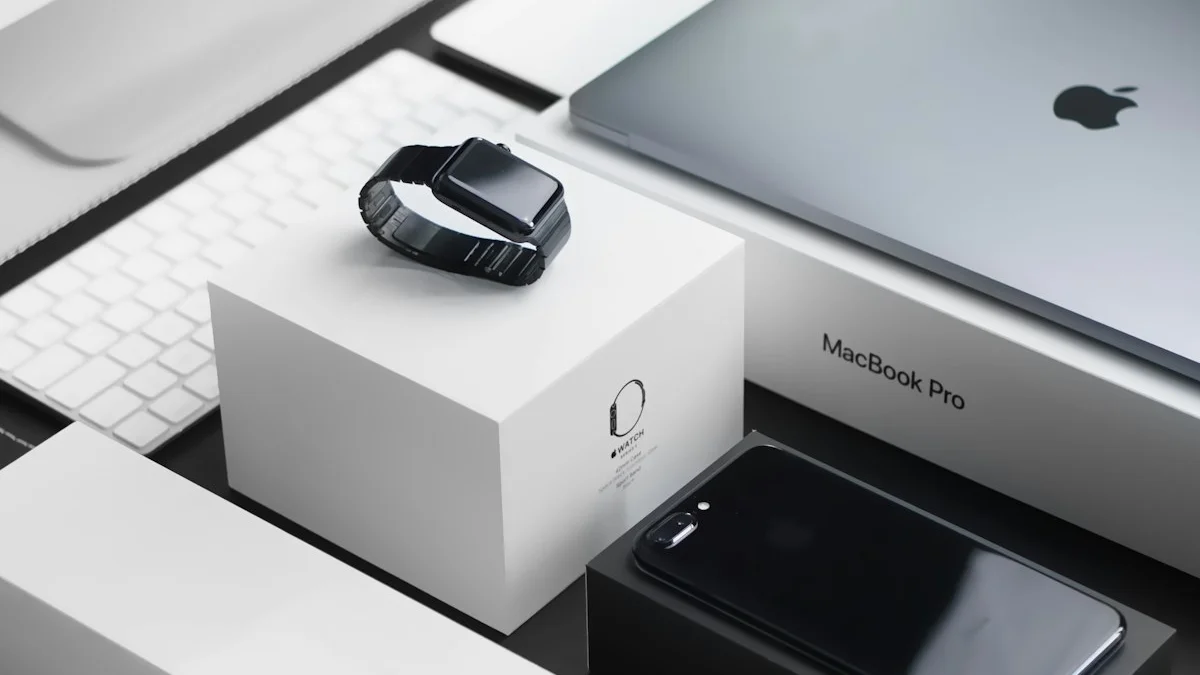
Apple’s March 2026 launch included nine major hardware updates. The highlights were the iPhone 17e ($599) featuring the A19 chip and C1X modem, and the all-new MacBook Neo, a highly portable 12-inch laptop priced at an aggressive $599. The Mac lineup saw the introduction of the M5 MacBook Air and M5 Pro/Max MacBook Pro models. Tablet users received a new iPad Air with the M4 chip. Accessories weren’t left out, with the debut of the AirPods Max 2 (USB-C), Nike Powerbeats Pro 2, and updated Studio Display XDR models. Most products are available for pre-order now with a release date of March 11, 2026.
“Apple is no longer just a premium brand; with the MacBook Neo and iPhone 17e, they are making a play for every corner of the market.”
1. iPhone 17e: The New Value King
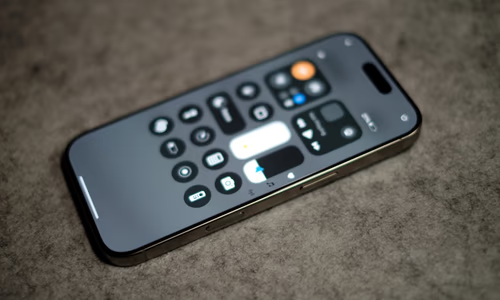
The iPhone 17e is the star of the show for budget-conscious buyers.
- Storage: 256GB base storage (up from 128GB).
- Modem: The new C1X modem (up to 2x faster than iPhone 16e).
- Camera: 48MP Fusion camera with 2x optical-quality telephoto.
- Price: Still starts at $599.
2. MacBook Neo: The $599 Mac is Real
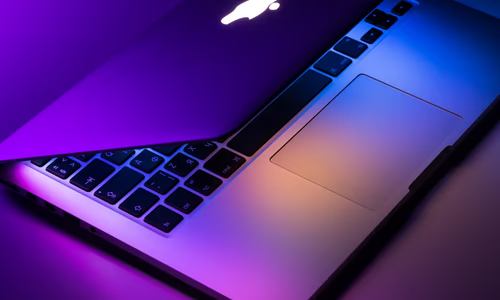
For years, rumors of a “budget MacBook” have circulated. The MacBook Neo finally delivers.
- Form Factor: Ultra-thin 12-inch design.
- Specs: M3 chip, 8GB RAM, 256GB SSD.
- Target: Ideal for education, light office work, and travel.
3. M5 MacBook Air & Pro: Pro-Level Power
The M5 generation of chips focuses on Generative AI performance.
- MacBook Air: Now with the M5 chip, offering 20% faster CPU speeds than the M3.
- MacBook Pro: M5 Pro and M5 Max chips include a dedicated “AI Accelerator” for on-device LLM processing.
- Display: Improved 2000-nit peak brightness for HDR content.
4. AirPods Max 2: The Wait is Over
After years of waiting, the premium over-ear headphones received their first major update.
- USB-C: Lightning is officially gone.
- H2 Chip: Enables Personalized Spatial Audio and 2x better Noise Cancellation.
- Colors: Midnight, Starlight, Space Gray, and a new “Soft Pink” to match the iPhone 17e.
Conclusion: A Busy Year Ahead
Apple’s March 2026 releases set a high bar for the rest of the year. With the rumored iPhone Fold and Apple Smart Home Hub expected later in 2026, the company is showing no signs of slowing down. Whether you need a budget-friendly laptop or a pro-grade workstation, there has never been a better time to be in the Apple ecosystem.
Want to dive deeper into the tech? Read our analysis of the Apple C1X Modem vs. Qualcomm Performance.
Frequently Asked Questions
What should I look for when buying hardware for privacy?
Prioritise hardware that supports open firmware, has a strong repairability score, and does not require cloud accounts for basic functionality. Avoid devices that phone home or require proprietary driver blobs.
How long should quality tech hardware last?
Premium smartphones: 4-6 years. Laptops: 5-7 years. Desktops: 7-10 years. Hardware that receives long-term software support and is user-repairable provides significantly better long-term value.
Is newer always better when it comes to chips and hardware?
Not necessarily. Performance-per-watt improvements from one generation to the next have slowed. For most users, hardware from 1-2 generations ago provides excellent performance at significantly lower cost, with more stable driver support.
Why this matters in 2026
Apple’s March 2026 hardware launches sit within a supply-chain context that is becoming harder to ignore: TSMC concentration, US export controls on advanced chips, and the growing pressure to diversify fabrication away from a single geographic concentration point. For enterprise buyers, these factors are beginning to enter hardware procurement frameworks alongside price and performance.
The March 2026 Apple hardware launch lands in a supply-chain environment that makes the underlying manufacturing geography more relevant than it has been in any previous product cycle. TSMC’s concentrated Taiwan footprint, combined with US export controls tightening around advanced semiconductor production, means that buyers of Apple Silicon devices are making an implicit bet on the geopolitical stability of a very specific supply chain node.
Practical implications
- Evaluate hardware choices not only on performance, but on provenance, repairability, and the ability to isolate sensitive workloads.
- Consider whether a device or platform requires proprietary cloud dependencies that could be changed or disabled remotely.
- Use this story to reinforce hardware decisions with a sovereign supply-chain checklist, especially for enterprise and security-conscious buyers.
What to do next
Apple’s March 2026 launch reinforces a pattern visible since the M1 transition: Apple Silicon’s efficiency advantage is real, but the sovereignty trade-off is the closed firmware stack. The Secure Enclave delivers strong on-device key storage, but there is no mechanism to verify what the Neural Engine is doing with Apple Intelligence inference requests before iOS 20 ships.
How to apply this
Apple’s March 2026 launch makes the trade-off explicit: the hardware performance gap between the M4 Pro and competing chips is measurable, but the sovereignty gap — who controls the firmware, the model update schedule, and the on-device data processing policy — is the more consequential specification for professional buyers. temporary convenience, not a core long-term foundation.
What this means for sovereignty
Apple’s March 2026 hardware launches illustrate how consumer device choices now carry supply-chain implications: every Apple Silicon chip is fabbed at TSMC in Taiwan, and that geographic concentration is a risk that US government procurement guidelines are increasingly factoring into purchasing decisions. For consumers, the strategic question is which hardware vendor has a supply chain that is most resilient to geopolitical disruption.
Sources & Further Reading
- iFixit Repairability Scores — Independent hardware teardown and repairability ratings
- GSMArena — Comprehensive mobile device specifications and reviews
- NotebookCheck — In-depth laptop and hardware benchmarks