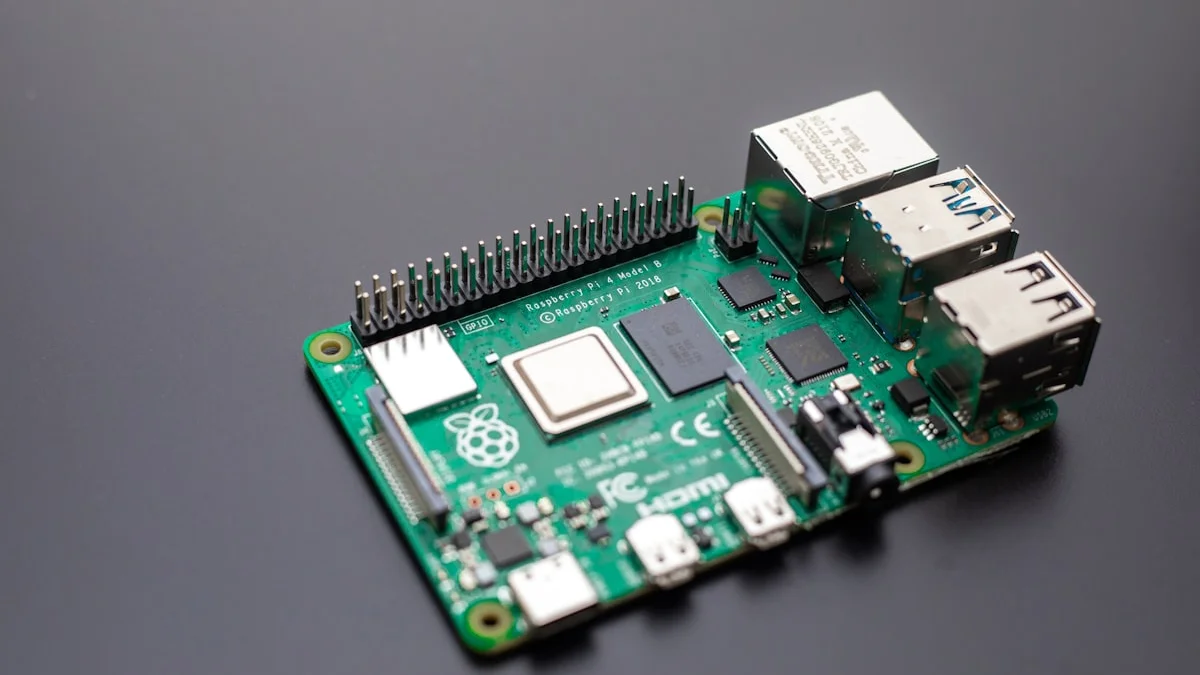
Quick Answer: In 2026, the Raspberry Pi has lost its crown as the budget-friendly choice for sovereign home labs, with prices for the Pi 5 hitting nearly $100. The alternative is RISC-V, an open-standard hardware architecture that offers better Digital Sovereignty, higher performance-per-watt for AI workloads, and dedicated NPU clusters for local LLM inference.
The Raspberry Pi Crisis of April 2026
The single-board computer (SBC) world was rocked this week by a major announcement from the Raspberry Pi Foundation: significant price hikes across the board. Driven by extreme volatility in the global memory and semiconductor markets, the Pi 4 and Pi 5 are now $25–$50 more expensive than they were just six months ago.
For the Sovereign Node community—those building private home labs to host their own data and AI—this is a turning point. The question is no longer “When will the Pi be in stock?” but “Why are we still using ARM?”
Part 1: Why the Raspberry Pi is No Longer the Best Choice
1.1 The Pricing Problem
At nearly $100 for a 4GB Pi 5, the “Value Proposition” of the Raspberry Pi has evaporated. When you factor in the cost of a power supply, case, and cooling, you’re approaching the price of a used mini-PC with far more power.
1.2 The “Black Box” Problem
While the Raspberry Pi runs open-source software, its underlying hardware is proprietary ARM technology. This creates a “Black Box” dependency that is increasingly at odds with the core principles of Digital Sovereignty.
Part 2: The Rise of RISC-V for Sovereign Nodes
RISC-V is an open-standard instruction set architecture (ISA) that is rapidly maturing in 2026. Unlike ARM or x86, RISC-V is royalty-free and can be implemented by anyone, leading to a surge in innovative, sovereign-friendly hardware.
2.1 Better AI Performance at the Edge
The newest RISC-V boards in 2026 are specifically designed for the “AI Era.” They often include dedicated NPU (Neural Processing Unit) clusters that outperform the Raspberry Pi’s CPU-based inference by a factor of 5x or more. This makes them ideal for running local LLMs and vision models.
2.2 True Hardware Sovereignty
Because the RISC-V ISA is open, the hardware is more transparent. This reduces the risk of hidden backdoors and allows for a more “Auditable” hardware stack—a critical requirement for any high-security sovereign home lab.
Part 3: Top RISC-V Alternatives to Watch in 2026
If you’re planning your next home lab upgrade, here are the top RISC-V boards to consider:
- StarFive VisionFive 3: The current “Gold Standard” for RISC-V SBCs. It features an 8-core processor and a powerful NPU, making it perfect for hosting a private OpenClaw agent.
- Pine64 Star64 (Gen 2): A community-driven board with excellent I/O and a focus on open-source drivers.
- BeagleV-Ahead: A robust, industrial-grade board designed for high-performance edge computing.
The Verdict: Time to Switch
The era of the “Cheap Pi” is over. In 2026, the smart money is on RISC-V. It’s more sovereign, more powerful for AI, and more aligned with the future of an open, decentralized web.
At Vucense, we’re already migrating our internal testbeds to RISC-V. It’s time you did the same.