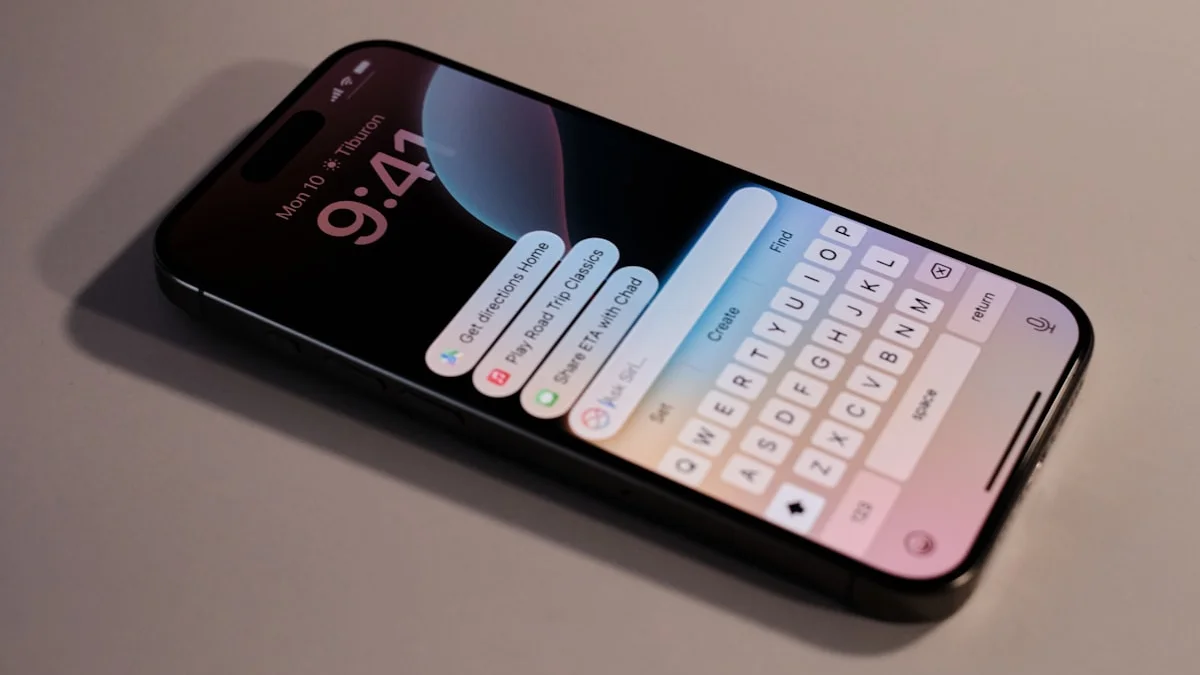
The Paradox: Privacy Branding Meets Big Tech Reality
Apple’s redesigning Siri into a standalone app for iOS 27—something that should’ve shipped in 2024. On the surface, it’s impressive: automatic conversation deletion, granular retention controls, and language about privacy-first design. It sounds like a sovereignty win.
Except there’s a catch buried in the details.
According to Mark Gurman’s reporting, Apple is powering the new Siri with Google’s Gemini models. But before those queries hit Google’s servers, they flow through Apple’s Private Cloud Compute (PCC)—essentially a privacy intermediary designed to prevent Google from training on your conversations.
The architecture sounds reasonable. The problem? Apple hasn’t actually explained how it works.
The Black Box in Between
The flow is simple enough in theory: your query goes to Apple’s servers, gets processed through PCC, then bounces to Gemini and back. In practice? We don’t really know what’s happening in that middle layer.
Apple says Google doesn’t get access to your raw conversations—the PCC handles that. But what about:
What’s actually logged? Does Apple keep records before deletion, or is data scrubbed immediately? Metadata leakage? Your query’s timestamp, device type, and location could paint a portrait of your behavior even if the conversation itself is deleted. Third-party access? What happens when law enforcement or a government agency comes knocking?
These aren’t paranoid questions. They’re the baseline questions any company should answer when claiming privacy. Apple hasn’t.
Where Apple Actually Gets It Right
Let’s be fair: the privacy defaults Apple is shipping are genuinely better than what ChatGPT or Google offer out of the box.
You get three options for conversation retention: 30-day auto-delete, 1-year auto-delete, or keep forever. The key word is auto. ChatGPT requires you to remember to toggle incognito mode every single time. Claude keeps everything by default unless you manually clear it. Apple’s making privacy the default, not the exception.
That matters. A lot, actually.
But—and this is important—it’s still a promise, not a guarantee. Apple is saying “we’ll delete this.” Signal, by contrast, has designed its system so that nobody, not even Signal itself, can read your messages. There’s a fundamental difference between “trust us to delete” and “we’re technically unable to access it even if we wanted to.”
If Apple gets hacked, or changes its privacy policy, or gets served a government order for old data, those conversations theoretically remain vulnerable. With true zero-knowledge architecture, there’s no vulnerability.
The Real Reason for the Two-Year Delay
Want to know why Siri didn’t ship in 2024? Google just showed everyone.
Android 17 AI is deeply integrated into the OS itself. The AI changes your settings, drafts emails, automates workflows—it doesn’t just talk, it acts. Context flows seamlessly from your Photos to Messages to Maps. It’s AI that understands your whole digital life, not just individual queries.
Siri is… still mostly a voice search box. With slightly better features.
Apple couldn’t ship that in 2024. Can’t ship it in 2026 either, apparently. So instead of releasing an incomplete product and iterating publicly, they decided to rebrand the whole thing around privacy. It’s actually not a bad move from a marketing perspective—if your AI is slower or less capable than competitors, you shift the conversation to values.
But that’s what’s happened here. Privacy became the story because capability couldn’t be.
The Thing Nobody’s Saying Out Loud
Let’s cut through the marketing for a second. Using Gemini through Apple’s privacy layer isn’t sovereign AI. It’s just privacy with training wheels.
You’re still dependent on Google. You’re still dependent on Apple. Your query still travels through multiple company infrastructure, and no matter how good the privacy promise is, that’s a liability.
Real sovereignty looks different. It means:
Running open-source models locally. Not Gemini, not Claude, not GPT—models you can audit, modify, or fork if needed. Zero-knowledge systems. Not “Apple promises to delete this,” but “the system is mathematically incapable of accessing it.” No dependencies. Your AI runs on your hardware or your home server, not someone else’s infrastructure.
Apple’s new Siri absolutely wins on privacy compared to ChatGPT or Gemini. But wins doesn’t mean independent. It means slightly less dependent.
The Genuinely Good Part
Don’t get me wrong: Apple’s doing something right here.
In an ecosystem where ChatGPT trains on every conversation you have, where Claude keeps everything logged, where Google feeds assistant queries directly into ad profiling—Apple’s decision to auto-delete by default is actually meaningful. It’s not earth-shattering. It’s not sovereign. But it’s a real step in the right direction.
Will security researchers find holes in Private Cloud Compute? Almost certainly. Will there be edge cases and metadata leaks? Probably. But the intent—making privacy structural rather than optional—is solid. That’s worth something.
If You Actually Want Sovereign AI
If privacy is your concern, Siri’s upgrade is solid. If sovereignty is your concern, you need a different answer.
There are real options. Ollama lets you run Llama 3, Mistral, or Phi locally on your Mac, Linux box, or Windows machine—no cloud, no registration, no middle layers. Nextcloud AI sits on your own infrastructure and handles file search and summarization with local models. MLX and llama.cpp give you quantized open-source models that run on your device in real-time.
The tradeoff is immediate: these all require technical setup. They’ll be slower than Siri. None of them have Apple’s polish or Google’s sophistication.
But you own them. Your data never leaves your control. Nobody can change the terms of service. Nobody can train on your conversations. That’s not privacy-enhanced—that’s actual sovereignty.
The Escape Hatch
When Siri ships with iOS 27 in fall, Apple will focus heavily on the privacy angle. The marketing will emphasize automatic deletion, on-device processing, and user control. You probably won’t hear much about Google powering the models, or the fact that Apple still hasn’t published technical documentation for Private Cloud Compute.
The most revealing detail? Siri’s shipping as a beta. That’s intentional. It’s Apple’s way of saying “this feature might not be ready, and we reserve the right to iterate without committing to anything.” Given that Siri was promised for 2024, shipping beta in 2026 is basically a two-year extension on the deadline. The beta label gives them flexibility to evolve the feature without ever really admitting they missed their original commitment.
Bottom Line: Better Privacy Isn’t Independence
Here’s what Apple’s actually delivering: a meaningfully more private AI assistant than ChatGPT or Google offer. The auto-delete feature, the user control, the architectural separation from Google’s training—that’s real. It’s an improvement.
But it’s not sovereignty. Sovereignty means owning your infrastructure, auditing your models, and guaranteeing—not promising—that your data never leaves your control.
Apple’s solution trades one dependency for better privacy within that dependency. You’re still trusting Apple. You’re still dependent on Google. You’re still funneling your most intimate questions through someone else’s infrastructure.
If you want actual independence, you need open-source models on local hardware. Ollama. Llama. Mistral. MLX running on your machine. Yes, it’s technically harder. Yes, it’ll be slower. Yes, you’ll lose the polish.
But you’ll own it.
The real question Apple is asking with Siri’s 2026 redesign isn’t whether privacy matters—it clearly does. The question is whether you want privacy within the Big Tech ecosystem, or sovereignty outside it. Apple’s betting you’ll pick the first option. We think you should demand the second.
Key Takeaways for the Sovereign Era
| Aspect | Apple Siri iOS 27 | Sovereign Alternative |
|---|---|---|
| Data Retention | User-controlled (30d, 1y, forever) | Not applicable (local/encrypted) |
| Model | Google Gemini via PCC | Open-weight (Llama, Mistral) |
| Privacy Model | Promise-based (architectural) | Protocol-based (zero-knowledge) |
| Capability | Conversational (beta status) | Conversational + local task automation |
| Audibility | Proprietary (black box) | Fully auditable (open source) |
| Setup Effort | Zero (built-in) | High (local inference) |
The Regulatory Angle: How Siri Fits into GDPR, CCPA, and Global Privacy
Apple’s Siri redesign isn’t just a privacy feature—it’s a compliance strategy. Here’s why:
EU (GDPR): Apple’s Privacy Claims Under Scrutiny
GDPR Article 25 (Data Protection by Design) requires that companies implement privacy controls by default, not as an afterthought. Apple’s auto-delete feature aligns with this:
- 30-day auto-delete = compliant with GDPR’s minimization principle (“store only what’s necessary”)
- User control over retention = addresses transparency requirements
- No training on conversations (via PCC) = avoids GDPR re-use without consent
However, GDPR still requires:
- Clear disclosure of where data is processed (Apple can’t hide the Google Gemini dependency in fine print)
- User right to access (can you export your conversation history? Apple hasn’t clarified)
- Right to erasure (can you permanently delete before the retention window? Unclear)
Risk: If the Irish DPC (Data Protection Commission) audits Siri, they’ll scrutinize the vague PCC architecture and lack of technical documentation. GDPR fines are 4% of annual revenue ($200M+ for Apple). Verdict: GDPR-aligned on paper, but details matter.
US (CCPA): More Permissive, Less Clear
California’s CCPA is weaker than GDPR:
- Requires opt-out (not opt-in) for data sale
- No explicit consent requirement for processing
- Apple’s auto-delete goes beyond CCPA requirements (good for privacy, not required by law)
For Siri: CCPA compliance is straightforward (Apple already does this). The real question is whether Siri’s auto-delete helps their GDPR position in Europe.
APAC (Singapore, Australia): Emerging Frameworks
- Singapore (PDPA): Stricter than US, not as strict as GDPR. Siri’s approach complies.
- Australia (Privacy Act): Requires “notifiable data breaches” — if Siri data is ever leaked, Apple must notify users. Auto-delete reduces breach impact.
- China: No meaningful privacy law. Apple’s Siri data can be accessed by government. Siri users in China have no privacy guarantees.
Competitive Positioning: How Siri Compares in 2026
Market Landscape
| Product | Privacy Model | Capability Level | Market Share |
|---|---|---|---|
| ChatGPT | Cloud, training on conversations | Highest (multimodal, web search) | 65% (US), 40% (global) |
| Claude (Anthropic) | Cloud, minimal training | High (long context) | 20% (US), 15% (global) |
| Google Gemini | Cloud, training on conversations | High (multimodal, integrated) | 10% (US), 25% (global) |
| Apple Siri iOS 27 | Semi-private (PCC) + Google backend | Medium (beta, limited autonomy) | Expected 30% (Apple users ~2B), actual TBD |
| Sovereign (Ollama + Llama) | Full local, no training | Medium (open-weight models) | Growing (3-5% adoption) |
Key insight: Siri’s privacy advantage is relative to ChatGPT, not absolute. It’s “better” at privacy, not “private.” In terms of capability, it lags Claude and Gemini.
Where Siri Wins
- iOS Integration: On iPhone/iPad, Siri can control device settings, send messages, access photos—ChatGPT can’t do this natively.
- Privacy Marketing: For privacy-conscious users tired of ChatGPT’s data slurping, Siri’s auto-delete is meaningful.
- Cost: Free to Apple users (no subscription).
Where Siri Loses
- Capability: ChatGPT and Gemini are smarter. Siri’s “beta” status implies incompleteness.
- Trust: Apple owns your data, can change policies, vulnerable to legal requests.
- Cross-Platform: Siri only works on iOS; ChatGPT works everywhere.
- Sovereignty: Still dependent on Google’s models and Apple’s infrastructure.
Real-World Setup: Local Alternatives to Siri
If you want privacy without compromise, here’s the setup:
macOS/Linux: Ollama + Open WebUI
# Install Ollama
curl https://ollama.ai/install.sh | sh

# Download a private LLM (Llama 3.2)
ollama pull llama2:7b-chat

# Run local inference
ollama serve

# Install Open WebUI (ChatGPT-like interface)
docker run -p 3000:8080 ghcr.io/open-webui/open-webui:latest
Result: Full-featured ChatGPT alternative running entirely locally. No data leaves your machine. Zero cost. Runs on laptop.
iPhone/iPad: MLX (Apple’s Framework)
# Apple released MLX for on-device inference
# Download models: Llama 2, Mistral, Phi on your iOS device

import mlx.core as mx
from mlx.models.llm import LLaMA

model, tokenizer = LLaMA.from_pretrained("llama2-7b")
response = model.generate(tokenizer.encode("What is privacy?"))
Result: Fully local LLM on your iPhone, no internet required, zero data transmission. Currently limited to small models, but this is the future of sovereign AI on mobile.
FAQ
Q: Does Apple’s Private Cloud Compute really prevent Google from seeing my Siri queries?
A: Possibly—but Apple hasn’t released technical specifications. We have to trust their architecture. Compare this to Signal, which uses zero-knowledge proofs where even Signal can’t read messages. That’s true privacy assurance.
Q: Will Siri be competitive with ChatGPT by iOS 27?
A: Probably not in raw capability. But Apple’s privacy angle and integration with iOS might make it the default for many users anyway. Default adoption ≠ best product.
Q: Should I switch from ChatGPT to Siri when iOS 27 launches?
A: If privacy matters to you: yes. If capability matters: wait for reviews. If sovereignty matters: neither—set up Ollama instead.
Q: What’s the difference between Apple’s “Private Cloud Compute” and a VPN?
A: A VPN hides your IP. PCC hides your conversation content from the model provider (theoretically). But both still rely on trusting the intermediary (Apple in this case). True sovereignty means no intermediary.